TEXTURE IS INFORMATION: HOW THE BODY GATHERS INSIGHT FROM FOOD
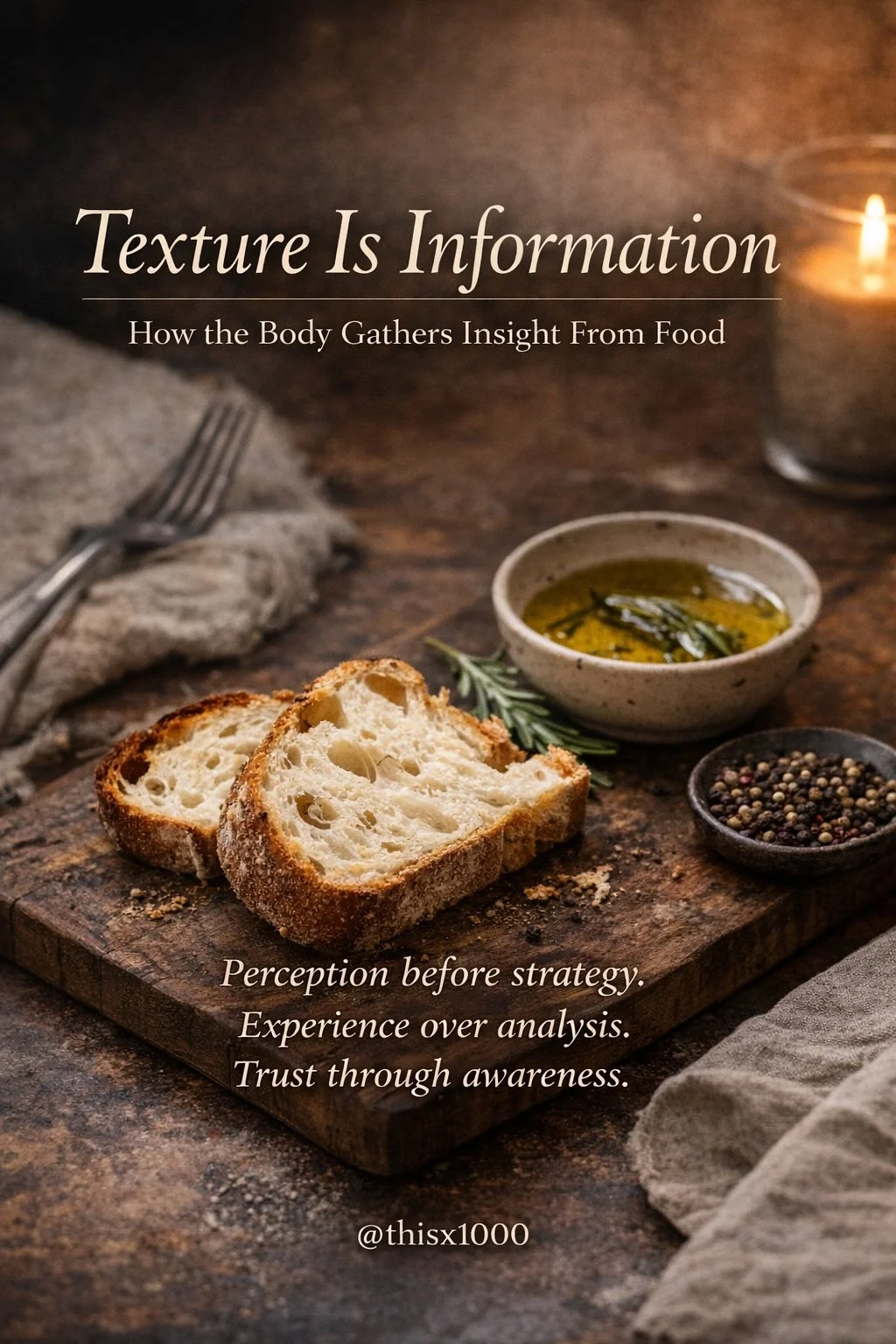
WHAT HAPPENS WHEN WE STOP ANALYZING FOOD AND START NOTICING HOW IT IS EXPERIENCED?
TEXTURE AS SENSORY INFORMATION
Texture is one of the body’s primary ways of gathering information. Before strategy. Before rules. Before macros or labels. Perception comes first.
The body is constantly responding to texture, temperature, density, pace, and contrast. Not consciously. Automatically. This is why two meals made from the same ingredients can land completely differently. The body does not respond to food in isolation. It responds to experience.
SLOWING DOWN TO LET THE BODY REGISTER
Experiencing texture invites a natural slowing down, both in the preparation of a meal and in the act of eating. That pause creates space. Not to control the moment, but to let the body register it. To notice what the body is seeking and how it responds to what is being offered.
Cravings for specific textures are not random. They are signals. Requests for satisfaction, for settling, for safety. Crunch, creaminess, warmth, chewiness. These sensations communicate what the body needs in order to feel complete and supported.
CHEWING, PACE, AND SENSORY FEEDBACK
Chewing matters. The way food feels in the mouth. The resistance. The sound. These sensory cues are part of the body’s feedback system. When we eat quickly, those signals do not fully register. The body is not reassured that it has received what it needs. The texture experience passes before the stomach has time to respond.
Without the opportunity to savor, fullness cannot fully communicate itself. Enjoyment is skipped. Satisfaction is left unfinished. What feels like a craving for more food is often a craving for a missed experience, or for nervous system regulation that never had a chance to settle.
True hunger can show up as a texture craving because nourishment is not only nutritional. It is sensory. The body requires both.
WHY THE SAME FOOD FEELS DIFFERENT
Think about a simple slice of bread.
Do you experience it the same way every time?
A slice from a freshly baked sourdough boule carries warmth, elasticity, and anticipation. That same slice the next day tells a different story. Toasted in a skillet with olive oil, it becomes crisp, aromatic, grounding. Each version sends a distinct sensory message to the nervous system before digestion even begins.
Preparation matters. Anticipation matters. Enjoyment needs time to complete its full arc, from desire, to experience, to satisfaction.
Sometimes the mouth wants more simply because the experience was pleasurable. Slowing down allows the stomach to catch up. It creates space to distinguish between enjoyment and true need.
HUNGER, FULLNESS, AND PERCEPTION
The body is highly attuned to balancing texture, taste, macronutrients, and digestive feedback. Sensory cues like mouthfeel, temperature, and density help the body predict what it is about to receive. Even visually, texture communicates reassurance. I see you. I hear what you need. I am responding.
Hunger and fullness are separate but related experiences, and texture plays a role in how each is perceived. When too much energy is spent analyzing food, we attempt to override perception instead of listening to it. We forget that the body leads with experience.
PERCEPTION OF HUNGER.
PERCEPTION OF CRAVING.
PERCEPTION OF THE PLATE.
PERCEPTION OF THE MEAL ITSELF.
WHEN EXPERIENCE AND EXPECTATION DO NOT MATCH
When the lived experience does not match what the body anticipated, satisfaction remains incomplete.
TEXTURE AND TRUST
Texture is not about becoming better at eating.
It is about remembering how to listen.
And learning to trust what the body already knows.